
Don't Wait Too Long: Closing Your Pool Late on Martha's Vineyard or Cape Cod Could Cost You Thousands

Close Your Pool Too Late on Martha's Vineyard or Cape Cod, and Winter Will Make You Pay For It

It usually starts with good intentions. Summer stretches on a little longer than expected, the pool still looks inviting through most of September, and closing it feels like something that can wait another week or two. Then one cold night arrives ahead of schedule, water still sitting in the lines, and a homeowner wakes up in November to a cracked pipe fitting, a ruined pump housing, or a heater that will not turn on again until it has been replaced entirely. What felt like a minor delay in September becomes a repair bill running into the thousands by spring, and often a repair that could have been avoided entirely with a single scheduled visit a few weeks earlier.
This is not a rare story on Martha's Vineyard or Cape Cod. It is one of the most common and most avoidable mistakes a pool owner can make, and nearly all of it comes down to timing. Closing your pool even a few weeks too late, or closing it properly but too casually, is often the difference between a quiet, uneventful winter and an expensive surprise waiting under the cover.
The Real Cost of Waiting Too Long to Close Your Pool
Water left sitting in plumbing lines, pumps, filters, and heaters does not simply sit there harmlessly once temperatures drop. It expands as it freezes, and that expansion has nowhere to go inside a sealed pipe or a cast housing except outward, cracking plastic, splitting metal, and forcing seals apart. A pump that costs a few hundred dollars to service in October can become a full replacement costing several times that once ice has done its damage. Filter tanks crack. Heater cores split. Underground lines that freeze near a joint can leak for weeks before anyone notices, quietly undermining the decking or the soil around the pool shell.
This kind of damage is not unique to pools. The same physics play out across an entire property every winter. A recent report from State Farm on frozen pipe claims found that from 2024 through mid 2025, more than twenty thousand claims were filed nationally for frozen pipe and winter water damage, totaling over six hundred million dollars in paid losses, with the average claim exceeding thirty thousand dollars. Notably, the same report lists winterizing pool equipment and draining lines as one of the basic prevention steps homeowners are advised to take before the cold arrives. Pool plumbing is simply a smaller, more concentrated version of the same risk that runs through every unheated pipe on a property once freezing temperatures set in.
Why the Second Half of September Is the Best Time to Close Your Pool on Martha's Vineyard and Cape Cod

Coastal New England rarely gives much warning before the first real cold snap. Nights can turn sharply colder in early October even while afternoons still feel like summer, and a single unexpected frost is often all it takes to catch an unwinterized pool off guard. Closing during the second half of September, while the water is still mild and the weather is still cooperative, gives a pool owner a comfortable buffer before that first hard freeze rather than a race against it.
There are practical advantages beyond simply beating the cold. Pool service companies are considerably less booked in late September than they are once the first frost warning sends every homeowner on the island and the Cape scrambling for an appointment at once. Water is easier to balance chemically while it is still relatively warm, which matters because a pool that is closed with unbalanced water often reopens in spring cloudy, stained, or fighting algae that took hold over the winter. Working in comfortable daytime temperatures also simply makes for a more careful, less rushed closing than one performed with cold hands during the season's first genuine cold snap.
What Actually Happens When Freezing Temperatures Hit an Unwinterized Pool
Understanding the mechanism makes the urgency easier to take seriously. Water expands by roughly nine percent as it turns to ice. Inside a rigid PVC pipe, a metal pump housing, or a sealed filter tank, that expansion has nowhere to release itself, so the pressure builds until something gives. Sometimes it is a hairline crack that only becomes obvious once the pool is reopened and water begins seeping from a fitting that looked fine all winter. Other times it is a full split that floods the equipment pad the moment temperatures rise enough to melt the ice blocking the leak. Either way, the damage happened quietly, usually overnight, long before anyone noticed. For a closer look at how this plays out specifically in pool systems, how freeze damage affects a pool walks through the most common failure points.
It Is Not Just the Equipment That Suffers
Pumps, filters, and heaters tend to get the most attention because they are the most obvious and often the most expensive components to replace, but they are far from the only casualties of a late or careless closing. Water trapped in skimmer lines and left too high against the tile line can freeze and push tile or coping loose over the course of a winter, a problem that often is not discovered until spring cleaning reveals cracked grout or a stone that has shifted out of place. Water left in the pool itself, rather than properly balanced and covered, tends to turn cloudy or green well before the first snowfall, giving algae months to establish itself under a cover rather than weeks. What looks like a minor shortcut in late September can quietly compound into a longer list of repairs by the time a pool is ready to reopen.
The Difference Between Closing a Pool and Closing It Properly

Timing alone is not enough. A pool closed on the right date but the wrong way can still suffer the same damage as one closed too late. A proper closing involves balancing water chemistry so it stays stable over months of dormancy, lowering the water level below the skimmer, and thoroughly blowing out every line with compressed air so no standing water remains where it can freeze and expand. Equipment needs to be drained and, in many cases, disconnected entirely rather than simply switched off. A quality winter cover, properly secured, keeps debris and sunlight from breaking down the water further while the pool sits closed. Skipping or rushing any one of these steps can undo the benefit of having closed early in the first place. Our guide on how to properly winterize your pool covers each of these steps in more detail, and our full guide to closing your pool for winter walks through the process from start to finish.
Common Mistakes That Turn a Simple Closing Into a Spring Disaster
Most winter pool damage traces back to a handful of familiar shortcuts. Leaving too much water in the lines because blowing them out fully takes an extra half hour. Reusing an old, worn cover instead of one that actually seals and supports weight from snow and ice. Assuming a pool heater does not need special attention because it was recently serviced. Delaying the closing because the weather still feels warm enough to swim one more weekend. Each shortcut on its own might seem minor, but combined, they are the reason so many spring pool openings turn into unplanned repair projects rather than the simple, joyful start to summer they should be. If your pool has ever seemed to lose water unexpectedly after winter, why your pool may be losing water is worth a read, since a slow winter crack is one of the more common and least obvious causes. A closing checklist can help catch these details before they become a problem, and our seasonal pool closing checklist lays them out clearly.
Why a Professional Closing Is Worth It on Martha's Vineyard and Cape Cod
Coastal properties add another layer of complexity that makes professional experience genuinely valuable rather than simply convenient. Salt air accelerates corrosion on exposed fittings and metal components, sandy soil can shift underground lines slightly over time, and many older homes across the island and the Cape have plumbing configurations that are not always intuitive to someone closing a pool for the first time. A technician who has closed hundreds of pools in this specific climate knows where problems tend to hide before they become expensive, from a valve that always sticks in a certain configuration to a low spot in a line that never fully drains without extra attention. Reviewing a company's CPI certified pool services credentials is a reasonable starting point, and working with an experienced local pool contractor who offers ongoing seasonal care rather than a single one time visit tends to catch small issues, like a worn gasket or a slowly failing seal, before they turn into the kind of damage that shows up as a cracked pipe months later. You can also read more about what professional pool maintenance on Martha's Vineyard typically involves throughout the year, not only at closing time.
What to Do If You Have Already Missed the Ideal Window
If late September has already passed and the pool is still open, the situation is not hopeless, but it does become more urgent. The priority shifts from a calm, unhurried closing to getting the process done correctly and quickly before the next real cold snap arrives, since coastal New England can turn from mild to freezing with very little warning once October settles in. This is precisely the situation where calling a professional rather than attempting a rushed do it yourself closing tends to pay off, since a technician can typically complete a full closing in a single visit, including any equipment inspection needed to catch damage from an already cold night or two. Ongoing seasonal protection, covered in more detail in our guide to annual maintenance and winter pool protection, can also help limit further exposure if the closing itself has to happen a little later than planned.
Setting Yourself Up for an Easy Opening Next Spring
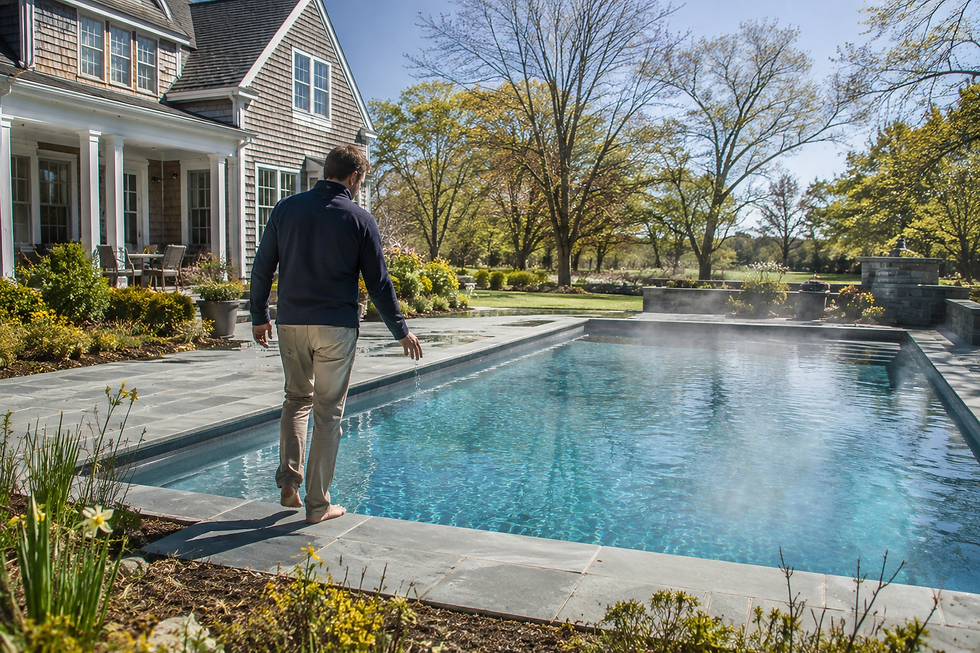
The real reward of closing a pool properly, and on time, shows up months later rather than immediately. A pool that went into winter balanced, drained, and protected typically reopens with clear water, functioning equipment, and none of the surprises that come from ice damage discovered too late. That difference matters more on Martha's Vineyard and Cape Cod than almost anywhere else, given how short the usable swim season already is. Every week spent dealing with spring repairs is a week not spent enjoying the water. If you want a sense of what a smooth spring looks like by comparison, our guide to planning ahead for pool opening and our late winter pool opening inspection guide both walk through what a well protected pool experiences on the other side of winter.
Signs You May Have Waited Too Long
Overnight lows have already dipped near or below freezing at least once;
Water is still sitting in the pump, filter, or heater with no plan to drain it this week;
The pool cover on hand is old, ill fitting, or was never designed for winter use;
You are unsure whether the lines have ever been fully blown out in past closings;
A hard freeze is forecast within the next several days and nothing has been scheduled.
Closing a pool is one of those tasks that rewards a little foresight far more than it punishes a little effort. Doing it in the second half of September, and doing it properly, is a small investment of time that protects a much larger one sitting in your backyard. If you would rather have a professional handle the details, from balancing chemistry to fully draining every line, our team can walk you through ongoing seasonal pool maintenance, and you can always contact us and we can guide you on your pool closing.


Comments