
How Long Does Concrete Pool Last? Tips for Extending Its Lifespan

What determines the true lifespan of a concrete pool on Martha’s Vineyard and Cape Cod
FULL ARTICLE
A concrete pool is often seen as a long-term investment. Solid, permanent, built to last. And in many cases, that assumption is true.
But in coastal environments like Martha’s Vineyard and Cape Cod, longevity is never defined by structure alone. It is defined by pressure.Salt air, freeze-thaw cycles, shifting soil, and seasonal use patterns all place continuous stress on a pool system. What appears stable on the surface may be gradually evolving beneath it.
Understanding how long a concrete pool lasts is not about assigning a fixed number. It is about recognizing the factors that determine whether that pool performs consistently for decades or begins to show signs of wear much earlier than expected.

Lifespan of Concrete Pools
Average Longevity
A properly built and maintained concrete pool can last 40 to 60 years or more.
The structural shell itself is highly durable. In many cases, it outlasts other pool types by a significant margin.
However, the surface and internal systems require attention over time. Plaster finishes typically need resurfacing every 10 to 15 years, depending on use and maintenance.
The structure remains. The performance depends on how it is maintained.
What Determines How Long a Concrete Pool Lasts
Several factors influence longevity:
Quality of initial construction
Soil conditions and structural support
Exposure to coastal elements
Water chemistry consistency
Ongoing maintenance practices
In coastal New England, these variables become more pronounced.
This is why the design and build phase plays such a critical role in long-term performance: https://www.millers-pools.com/products/gunitepool
Benefits of Concrete Pools
Durability and Structural Strength
Concrete pools are built to handle environmental stress.
They resist shifting better than many alternatives and adapt to custom designs without compromising structural integrity.
This is especially important in areas with sandy soil and a high water table, both common across Cape Cod and Martha’s Vineyard.
Design Flexibility
Unlike prefabricated systems, concrete pools allow for complete customization.
Shape, depth, features, and integration with the surrounding landscape can all be tailored to the property.
This flexibility is not only aesthetic. It allows the pool to be designed in response to environmental conditions.
Long-Term Value
Concrete pools tend to hold value over time.
When properly maintained, they contribute to the overall property experience and can enhance long-term resale appeal, particularly in high-end coastal markets.
Common Issues That Affect Lifespan
Cracking and Structural Movement
Small cracks are not uncommon.
They often result from soil movement, temperature changes, or minor settling. While not always structural, they should be monitored.
In coastal areas, where freeze-thaw cycles occur regularly, these movements can become more pronounced over time.
Surface Wear and Material Breakdown
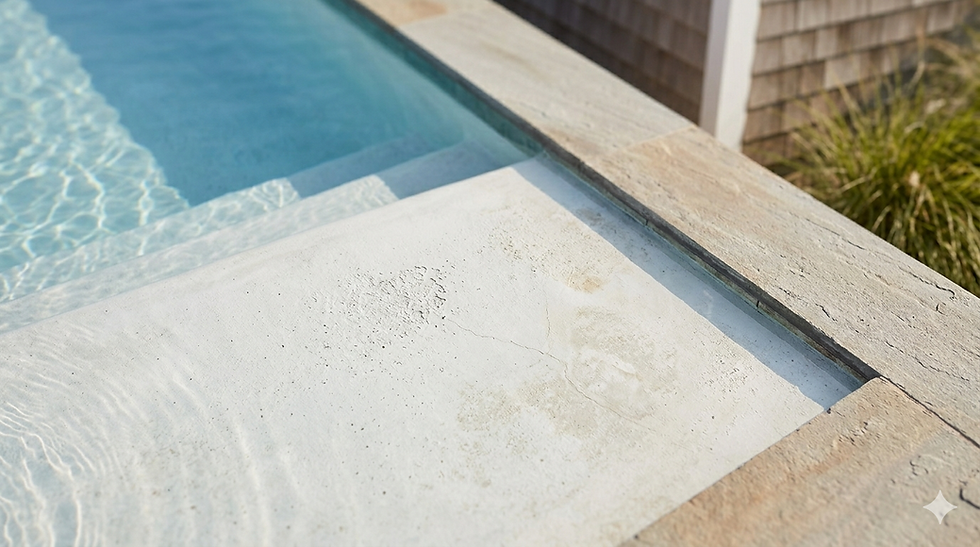
The pool surface experiences the most visible wear.
Exposure to chemicals, sun, and environmental debris gradually affects the finish. Over time, this leads to roughness, discoloration, or reduced comfort.
Resurfacing is part of maintaining long-term usability.
Water Chemistry Imbalance
Water chemistry plays a larger role than most homeowners expect.
Imbalanced water accelerates deterioration of both the surface and internal systems. It can lead to scaling, staining, or erosion of the finish.
Consistent monitoring prevents these issues before they become costly corrections.
Maintaining proper water balance is a foundational part of keeping a pool performing reliably:https://www.millers-pools.com/maintenancepool
Maintenance That Extends Lifespan
Regular Inspections
Routine inspections identify early signs of wear.
This includes checking surfaces, equipment, and structural components before minor issues develop into larger repairs.

Resurfacing at the Right Time
Resurfacing is not a failure. It is part of the lifecycle.
Waiting too long can lead to deeper damage that affects the underlying structure.
Timely resurfacing protects both appearance and integrity.
Consistent Water Management
Water chemistry should remain stable, not reactive.
Regular testing and adjustment ensure that the pool environment supports longevity rather than accelerating wear.
Ongoing care and preventive maintenance are key to preserving both performance and appearance:https://www.millers-pools.com/
When to Consider Replacement or Major Renovation
Signs of Structural Damage
In some cases, repairs are no longer sufficient.
Indicators include:
Persistent cracking
Significant structural movement
Repeated surface failure
These signs suggest that deeper issues may be present.
Cost of Repair vs Long-Term Value
At a certain point, ongoing repairs may outweigh the benefits.
A strategic renovation or rebuild allows for updated systems, improved efficiency, and better alignment with current property use.
Understanding when to make that transition is part of long-term planning, not just reaction.
What determines how long a concrete pool lasts:
• Quality of construction and structural design
• Exposure to coastal conditions and environmental stress
• Consistency of water chemistry management
• Timely resurfacing and maintenance
• Regular inspection and early issue detection
Closing Perspective
A concrete pool does not fail all at once.
It evolves over time, responding to its environment, its use, and the level of care it receives.
On Martha’s Vineyard and Cape Cod, where conditions are constantly shifting, longevity is not guaranteed by materials alone. It is supported by decisions made throughout the life of the pool.
When built correctly and maintained with consistency, a concrete pool becomes more than a feature. It becomes a stable, lasting part of the property, one that continues to perform long after its initial construction.


Comments